Where Your Ad Traffic Should Go
Summary
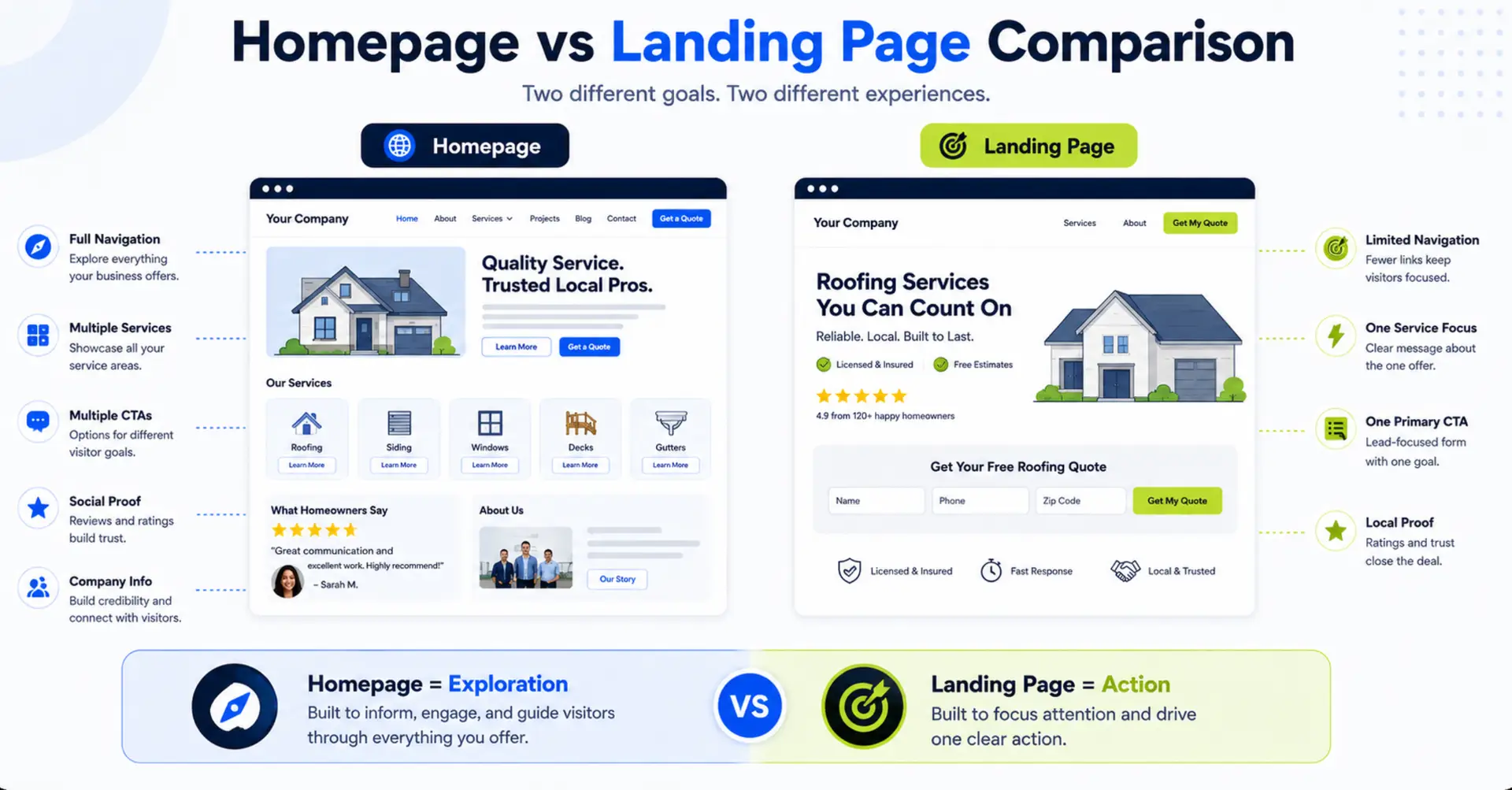
- A homepage introduces the full business. A landing page focuses on one service, offer, audience, or action.
- Paid ad traffic usually needs a focused destination that matches the ad.
- A homepage works for branded, referral, direct, and general research traffic.
- A landing page works for specific services, locations, offers, and urgent needs.
- Calls, forms, booked jobs, and revenue matter more than traffic alone.
When a homeowner clicks an ad for AC repair, drain cleaning, roof repair, or electrical service, they need a clear next step. If the page is slow, confusing, or too broad, that click can become wasted ad spend. So, what’s the difference between a homepage and a landing page, and where should it go?
What’s the Difference Between a Homepage and a Landing Page?
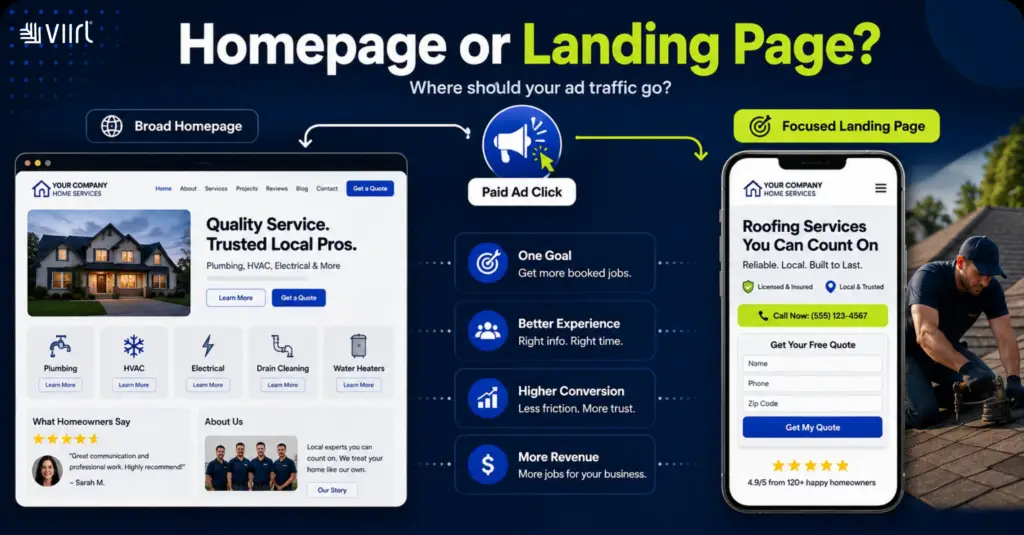
A homepage introduces the full business. A landing page is built for one specific campaign, service, audience, or action.
| Feature | Homepage | Landing Page |
| Main purpose | Introduce the business | Drive one action |
| Best use | General research | Specific campaigns |
| Links | Many | Few |
| CTA focus | Multiple options | One primary CTA |
| Audience intent | Broad or mixed | Specific, high intent |
| Ad traffic fit | Limited | Usually stronger |
| Example | Full plumbing website | Drain cleaning campaign |
What Is a Homepage?
A homepage is the front door of a website. It tells visitors what the business offers, where it works, and where to go next.
It commonly includes services, service areas, reviews, navigation, contact details, and general CTAs. For example, a plumbing homepage may link to drain cleaning, sewer repair, water heaters, and emergency service pages.
What Is a Landing Page?
A landing page is a focused page built for one campaign goal. It limits distractions and guides the visitor toward calling, booking, or requesting an estimate.
A good page includes one service, a clear headline, one CTA, local proof, relevant photos, a short form or call button, and a fast mobile experience.
Examples include an AC repair ad leading to an AC repair page or a roof replacement ad leading to a roof estimate page.
Should Ad Traffic Go to a Homepage or Landing Page?
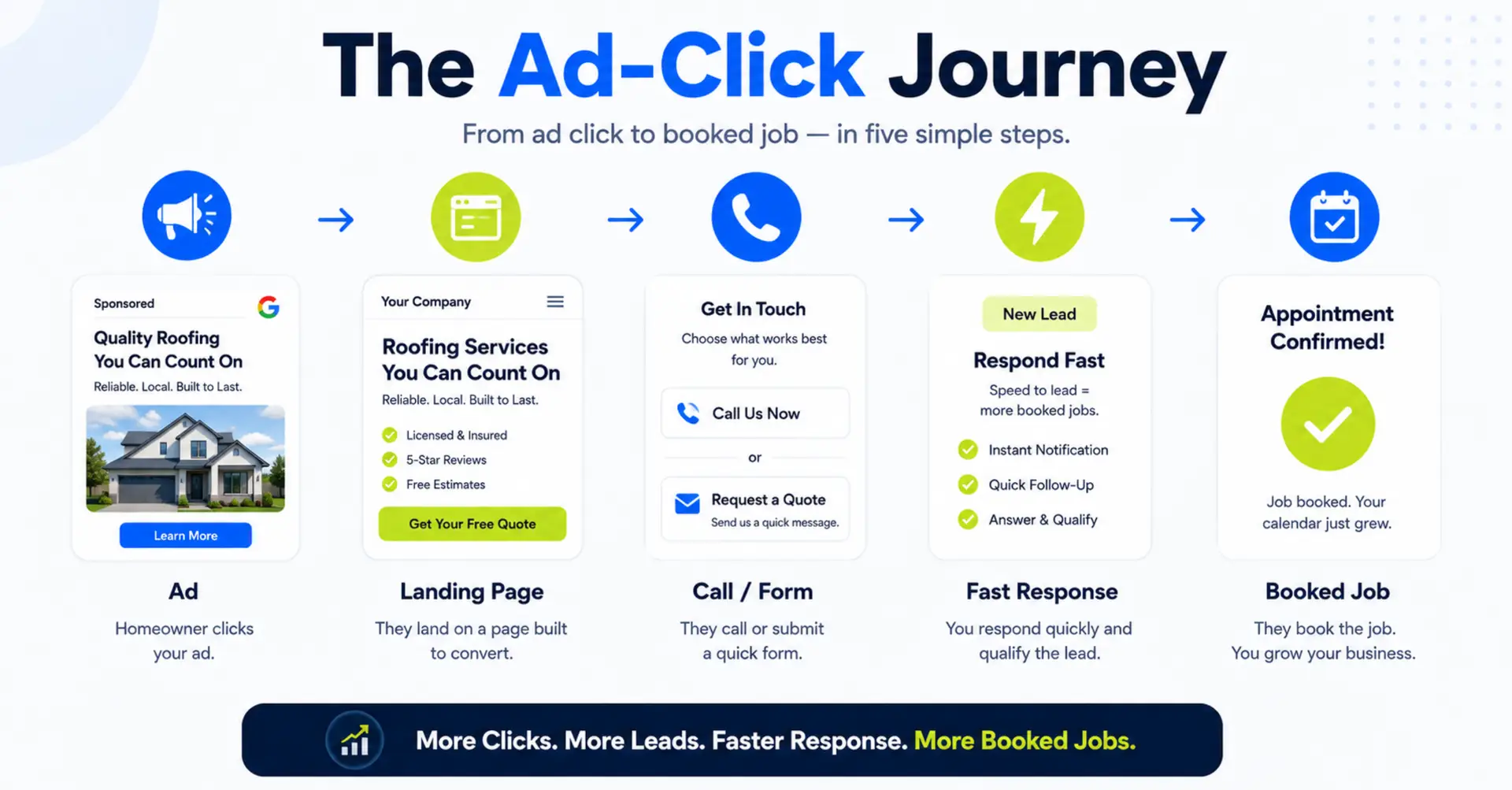
Most paid ad traffic should go to a landing page because the visitor clicked for a specific reason. Google recommends matching the destination to the ad text, keyword themes, and promised action, with an obvious way to contact the business.
The page should continue the message from the ad. The headline, location, offer, service details, images, and call to action should all match what the homeowner expected to find. This is often called message match. When the ad and page feel connected, visitors can quickly confirm that they are in the right place and decide whether to call, book, or request an estimate.
This approach applies to traffic from Google Ads, Meta, Yelp, Angi, Thumbtack, Nextdoor, and retargeting campaigns. Some platforms may allow a homeowner to call or submit information without visiting the website. However, when an ad does send someone to a website, the destination should be relevant to the service or offer they clicked.
Google Local Services Ads often use Google’s own call and message options. If the ad also links to a website, that page should still clearly explain the promoted service, service area, and next step.
When Should You Send Traffic to a Homepage?
Sending ad traffic to a homepage makes sense when the traffic is broad, branded, or informational. It works best when visitors want to learn about the overall business rather than take action on one specific service or offer.
Good homepage traffic sources include:
- Branded searches for the company’s name
- Direct visitors who type in the website address
- Referral traffic from partners or directories
- General company research
- Broad awareness campaigns
- Homeowners comparing the business’s full range of services
For example, someone searching for a plumbing company by name may want to review service areas, read testimonials, learn about the team, and compare several services before making contact. A homepage gives that visitor room to explore.
The homepage still needs to make the next step clear. Phone numbers, contact buttons, service links, reviews, and trust signals should be easy to find, especially on mobile devices. Even though the page serves a broad audience, visitors should never have to hunt for a way to call or request service.
A homepage is usually less effective when the ad promises something highly specific. Sending someone who clicked an “AC repair in Phoenix” ad to a general homepage may force them to search for the service and location information they expected to see immediately.
When Should You Send Traffic to a Landing Page?
Sending ad traffic to a landing page makes sense when an ad promotes a specific service, location, offer, or homeowner need. The page can continue the exact conversation started by the keyword and ad, making it easier for the visitor to know they are in the right place.
Good landing-page campaigns include:
- “Emergency plumber near me”
- “Roof repair estimate”
- “Electrical panel upgrade”
- “Garage door spring repair”
- Seasonal tune-up campaigns
- Limited-time service promotions
The best landing pages create a strong message match, meaning the keyword, ad copy, page headline, service details, location, imagery, and CTA all support the same need. If an ad promotes drain cleaning, the visitor should not land on a page that mainly discusses sewer replacement, water heaters, and every other plumbing service.
Landing pages are also useful when the business serves several markets. A page built for AC repair in Phoenix can include that location’s service area, customer reviews, availability, and contact information instead of relying on broad company-wide messaging.
A focused page should still answer the questions a homeowner needs before reaching out. It should explain the service, show why the business is trustworthy, clarify the service area, and make calling or submitting a form simple. The goal of sending your traffic to a landing page is to remove unnecessary choices that distract from the campaign’s main action.
What Should a Home Service Landing Page Include?
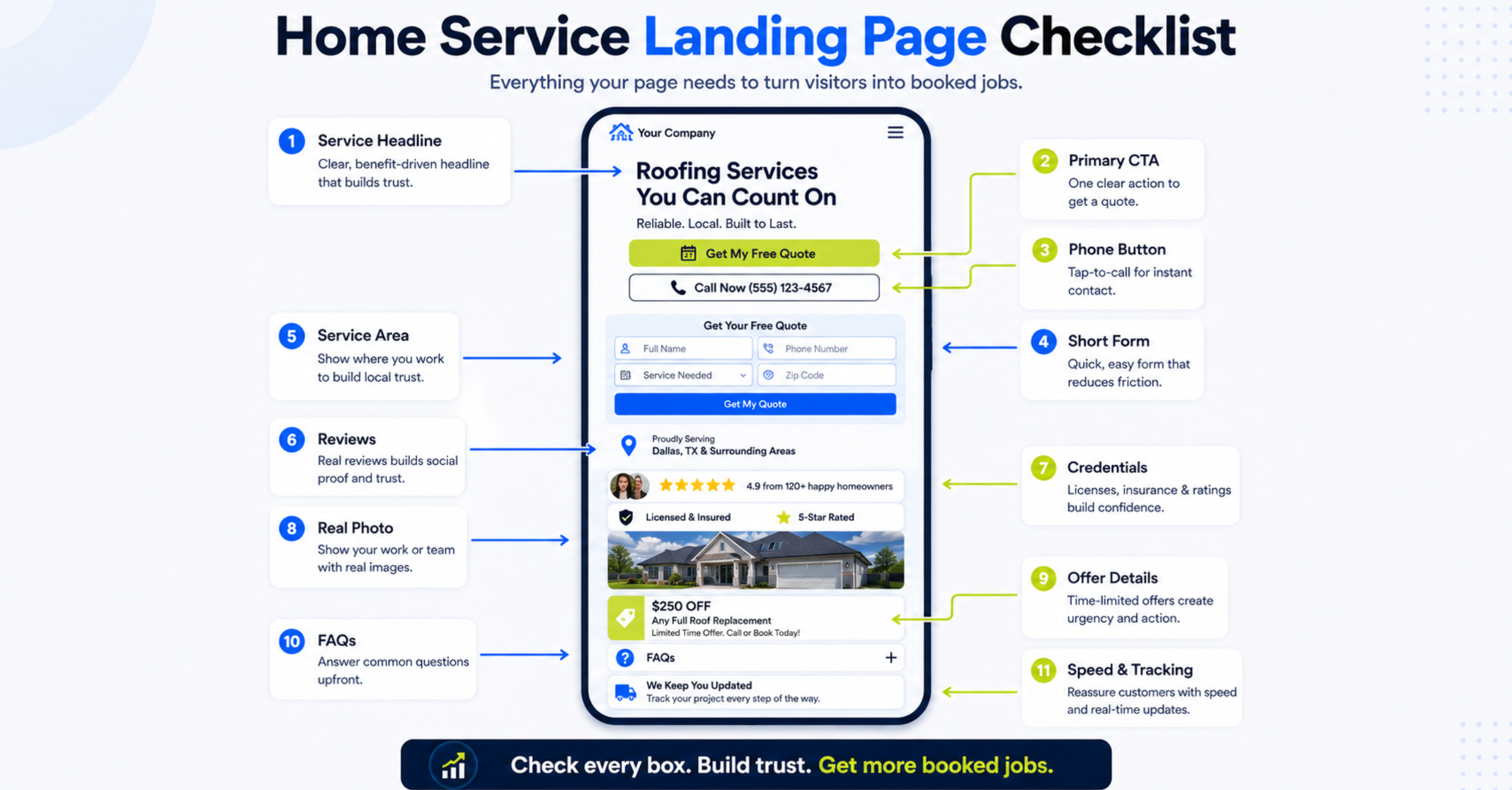
A strong home service landing page should explain the service, build trust quickly, and make it easy to book.
- Service-focused headline and one primary CTA
- Click-to-call button and short form
- Service area and truthful availability details
- Reviews, credentials, and photos
- Offer or financing details, when available
- FAQs and a fast mobile experience
- Tracking for calls, forms, and booked jobs
Why the Page After the Click Matters
The page after the click is where VIIRL helps turn paid traffic into a real business opportunity. Getting a homeowner to click an ad is only the first step. The destination page must match what they searched for, build trust quickly, and make it easy to call, book, or request service.
VIIRL looks at the full path:
- The ad reaches the right homeowner with messaging based on their service need, location, and intent.
- The landing page matches the ad with a clear headline, relevant service information, local trust signals, and one obvious next step.
- CRM integrations connect the inquiry to the business’s sales process, helping track what happens after the call or form submission.
- Lead Cloud connects marketing activity to leads, booked jobs, and revenue, giving business owners a clearer view of campaign performance.
- VIIRL’s marketing experts review the results and use real performance data to improve ads, landing pages, targeting, and budget decisions.
This full-funnel approach matters because a campaign should not be judged by traffic or clicks alone. A high-performing ad means little if the landing page is confusing, the wrong service is featured, or the resulting job cannot be connected to its original marketing source.
VIIRL helps home service businesses build and measure the complete journey from the first click to the booked job. That means better visibility into which ads, landing pages, services, and locations are creating meaningful results, so the marketing team can make smarter decisions about where to focus.
Use the Right Page for the Right Job
A homepage and landing page are both important, but they are not interchangeable. For most paid campaigns, a focused landing page gives homeowners a clearer path to call, book, or request service.
Want to know where your ad traffic should go? Schedule a free marketing or website audit with VIIRL.
FAQ
A homepage introduces the overall business and gives visitors several options for exploring its services, locations, and information. A landing page focuses on one campaign, service, offer, audience, or action. When people ask what’s the difference between a homepage and a landing page, the simplest answer is broad exploration versus focused action.
A landing page is usually a better destination for a specific paid campaign because it can closely match the ad and provide one clear next step. A homepage may still work for broad awareness or branded traffic. The right choice depends on the campaign goal and visitor intent.
A landing page is a focused web page created for a particular campaign or conversion goal. It usually contains limited navigation, a specific message, supporting proof, and one primary CTA such as calling, booking, or submitting a form.
A homepage is the main starting page of a website. It provides an overview of the business and helps visitors explore services, company information, locations, reviews, resources, and contact options.
A business may need a separate landing page for each major campaign, service, offer, location, or audience when the messaging is meaningfully different. It does not need dozens of nearly identical pages. Start with the highest-priority campaigns, track performance, and expand when the data supports it.