Summary
- A retargeting campaign shows follow-up ads to people who already interacted with your business online.
- Retargeting ads help bring interested homeowners back after they leave without calling, booking, or submitting a form.
- Homeowners may compare several businesses or need more time before deciding, so one visit is not always enough.
- Retargeting ads can appear across Google, YouTube, Facebook, Instagram, Nextdoor, websites, and apps.
- Track calls, forms, booked jobs, and revenue, not impressions alone.
Not every homeowner calls the first time they find you. Someone may visit an AC repair page, compare plumbing companies, research roof replacement, or save an electrician for later, then leave.
So, what is a retargeting campaign? It is a way to stay visible to people who already showed interest and give them another opportunity to return when they are ready.
What Is a Retargeting Campaign?
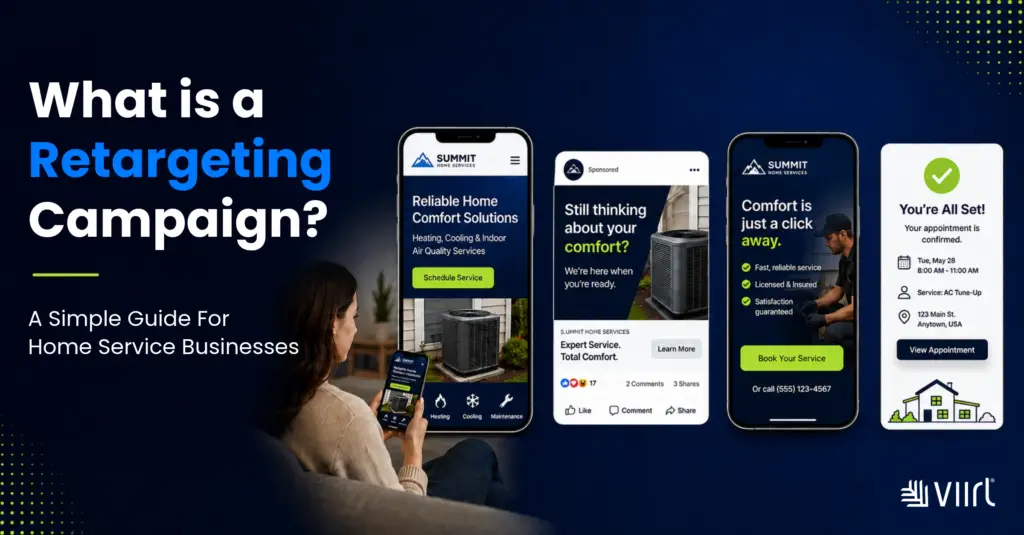
A retargeting campaign is a digital ad campaign that shows ads to people who have already interacted with your business online. That might include visiting your website, viewing a service page, clicking an ad, or starting a form without finishing it.
Instead of targeting only new audiences, retargeting focuses on people who already know something about your business. For home services, that can mean reminding someone about AC repair, drain cleaning, roofing, or another service they researched.
Retargeting doesn’t guarantee a return visit, but it does create another relevant opportunity to stay visible.
What Does Retargeting Mean?
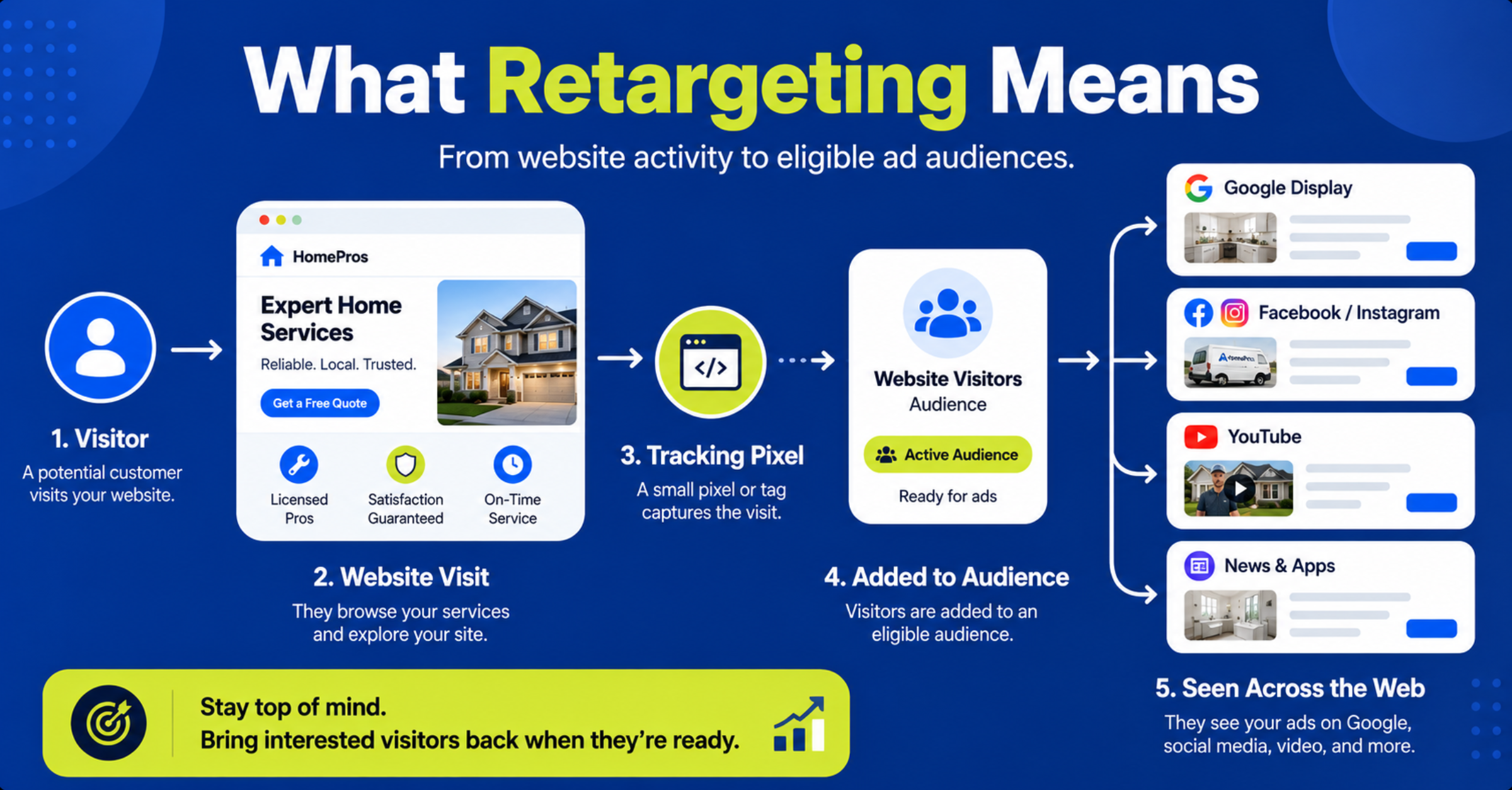
Retargeting means showing follow-up ads to people who previously visited your website or engaged with your business online.
A tracking tag or pixel can help an advertising platform build an audience from website activity. A tracking pixel is a small piece of code used to record certain website actions for advertising and measurement. Google, Meta, and Nextdoor all offer tracking tools that can support audience building or advertising measurement.
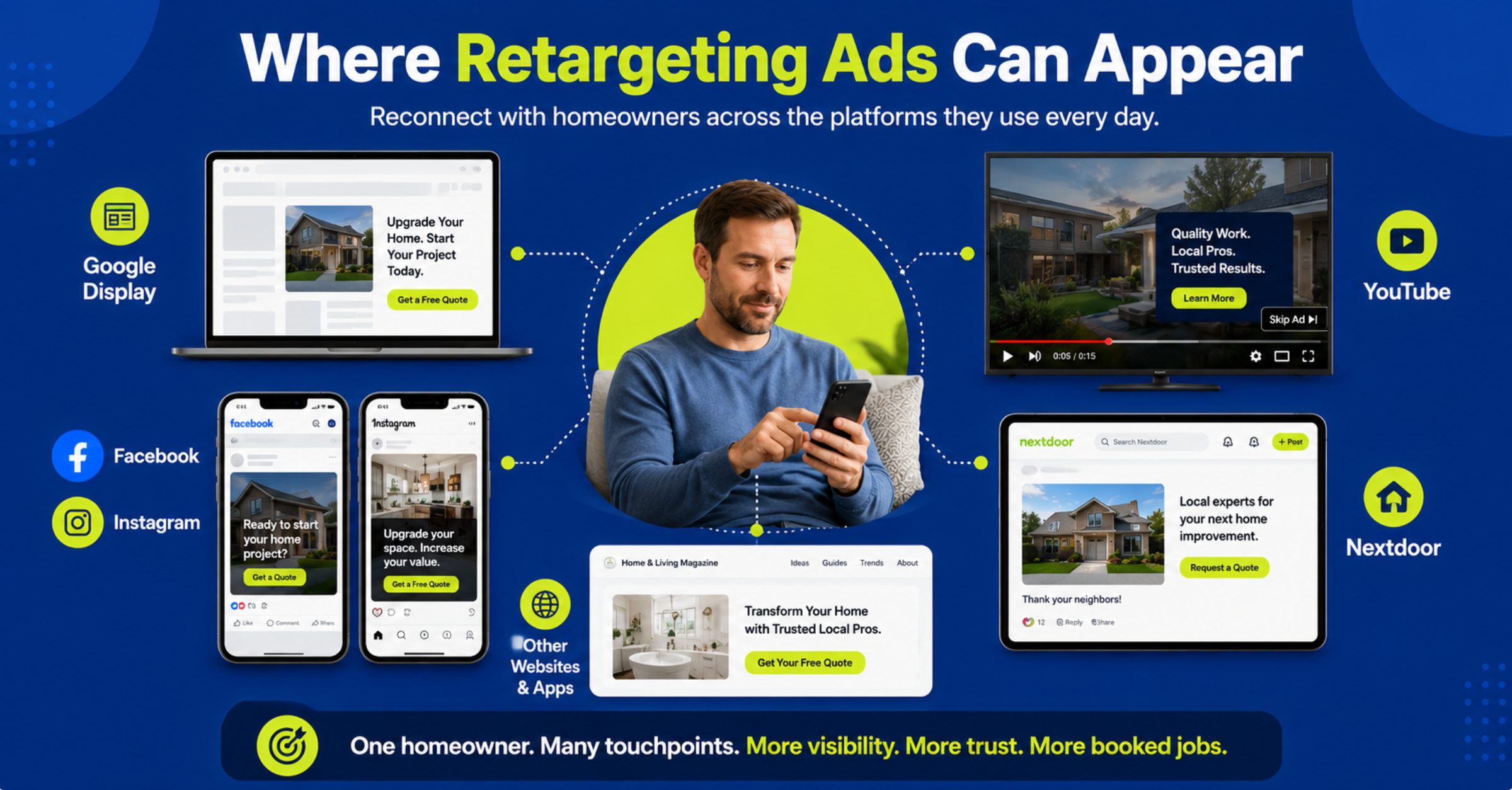
When a homeowner leaves your website, they may later see a related ad on Google, YouTube, Facebook, Instagram, Nextdoor, or another participating website or app.
What Are Retargeting Ads?
Retargeting ads are follow-up ads designed for people who have already shown interest in your business. They may use display, video, social, or other paid formats depending on the platform.
For example:
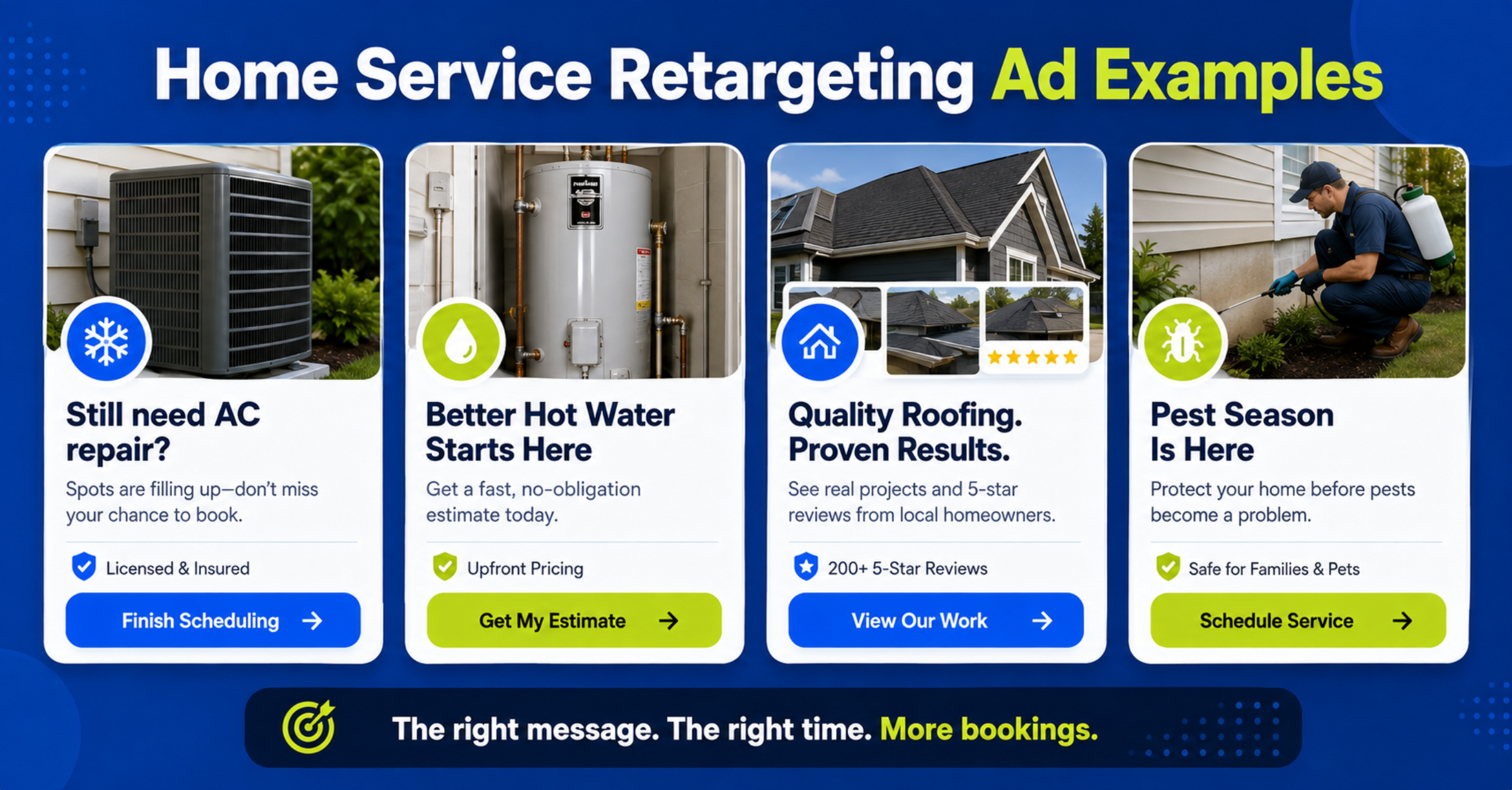
- An AC repair visitor later sees a scheduling reminder.
- Someone researching water heater replacement sees an estimate-focused ad.
- A roofing visitor later sees a review or completed-project ad.
- A pest control visitor sees a seasonal reminder.
Remember, the best ads feel relevant, not repetitive.
How Does a Retargeting Campaign Work?
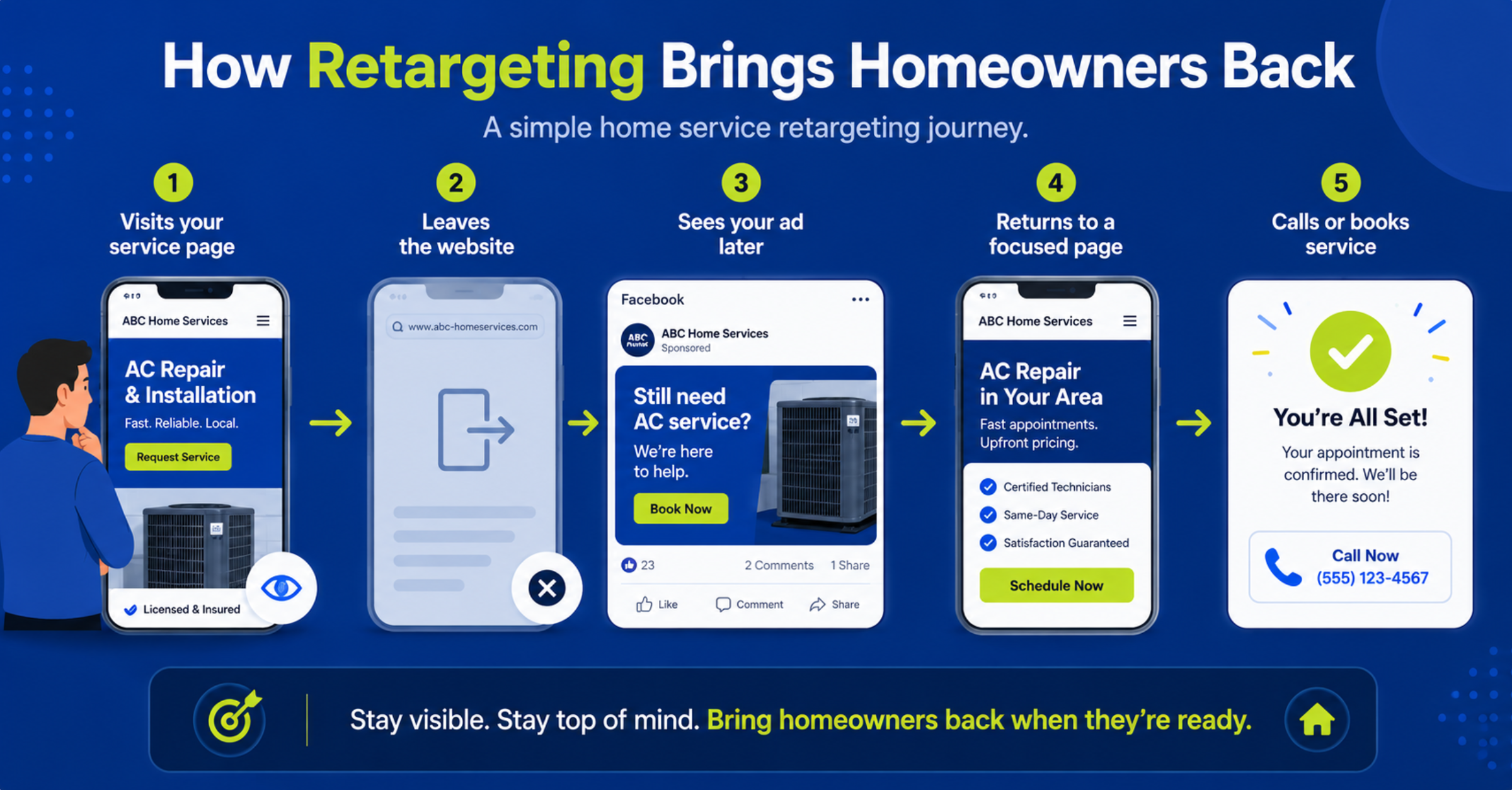
A retargeting campaign builds an audience from previous interactions and serves relevant ads after people leave your site. Google, for example, allows website visitors to be added to audience segments according to rules set by the advertiser.
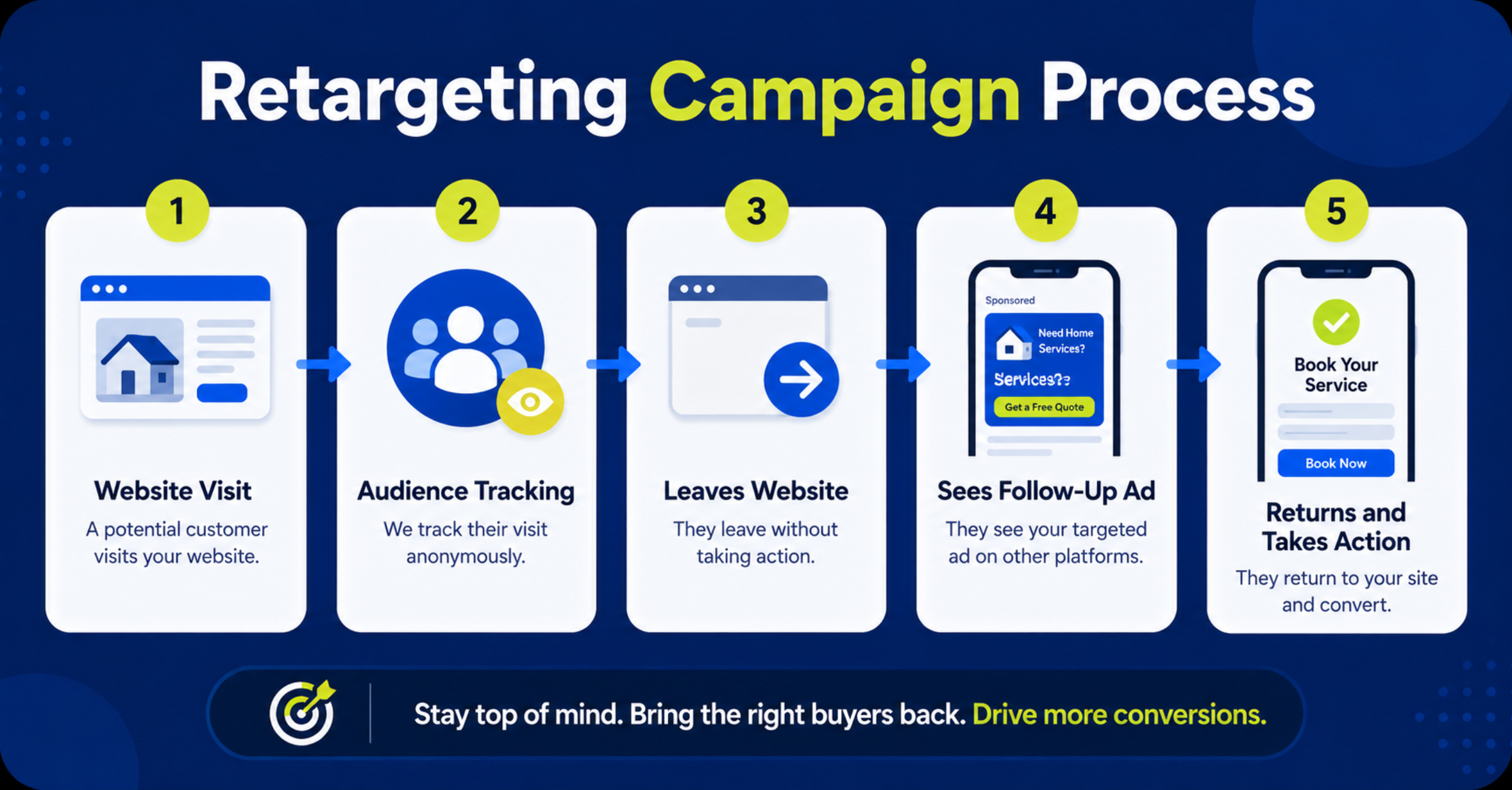
- A homeowner visits your website or landing page.
- A tag, pixel, or approved audience source records an eligible interaction.
- The homeowner leaves without converting.
- The platform may show a relevant follow-up ad.
- The homeowner can return and take the next step.
Retargeting must follow applicable privacy requirements and platform policies. Businesses should use appropriate consent and privacy controls for their setup. Google’s consent tools, for example, allow advertising and analytics tags to adjust their behavior based on a visitor’s consent choices.
Why Retargeting Matters for Home Service Businesses
Retargeting matters because interest doesn’t always turn into action on the first visit. A homeowner may be comparing companies, checking reviews, discussing a larger project, or simply getting interrupted.
Different services also need different messages. Emergency plumbing may need a direct call CTA, HVAC replacement may emphasize financing and reviews, roofing may use project proof, and pest control may use seasonal reminders.
Retargeting works best when the original website or landing page is strong. Google specifically recommends that ad destinations match what people expect from the ad and make the next action easy to find.
What Should Retargeting Ads Say?
Retargeting ads should match what the homeowner already showed interest in, and then give them a simple next step.
Good messages can:
- Remind them about the service viewed
- Highlight a review or trust signal
- Promote a relevant seasonal service or truthful offer
- Use a clear CTA such as Call Now, Schedule Service, or Request an Estimate
- Return them to a relevant landing page
Examples include: “Still need AC repair? Schedule service today.” or “Thinking about a roof replacement? Request an estimate.”
Keep urgency honest. The goal is relevance, not pressure.
Where Can Retargeting Ads Appear?
Retargeting ads can appear across search, display, video, social media, websites, and apps depending on the platform and campaign setup.
Google supports re-engagement across Display, Search, and YouTube. Meta supports website-based Custom Audiences for ads across its platforms, while Nextdoor offers Custom Audiences for retargeting through Ads Manager.
The right mix depends on audience size, service type, location, budget, creative, urgency, and tracking.
Retargeting Works Best With the Right Landing Page and Tracking
Retargeting works best when the return visit leads somewhere useful and the results connect to real business outcomes.
The ad brings the homeowner back. The landing page should continue the same message and make calling or submitting a form easy. Tracking should show whether that interaction became a lead, booked job, and revenue.
VIIRL manages paid marketing across multiple channels and helps home service businesses connect advertising performance to what happens after the click. Lead Cloud brings marketing, lead, job, invoice, and revenue data together.
VIIRL’s marketing experts use performance data to review audiences, creative, landing pages, targeting, and budget decisions. Retargeting becomes one part of a larger strategy focused on meaningful business results.
Quick Retargeting Checklist for Home Service Businesses
A strong retargeting campaign needs the right audience, message, destination, and tracking.
- Install the appropriate tracking tag or pixel
- Build audiences around meaningful website activity
- Match ads to the service viewed
- Use clear, honest CTAs
- Send traffic to a relevant landing page
- Exclude completed conversions when appropriate
- Refresh creative regularly
- Track calls, forms, booked jobs, and revenue
- Review performance regularly
- Follow privacy and platform requirements
Retargeting Helps Bring Interested Homeowners Back
A retargeting campaign helps your business stay visible after an interested homeowner leaves without taking action. It works best when the ads, landing page, tracking, and larger digital marketing strategy work together.
Wondering if retargeting makes sense for your home service business? Schedule a free marketing audit with VIIRL.
Retargeting FAQ
A retargeting campaign is a paid advertising campaign aimed at people who previously interacted with your business online. It can help bring website visitors or other interested audiences back after they leave without taking the desired action.
Retargeting means advertising again to people who have already shown interest through actions such as visiting a website or engaging with a business online. Tracking tools or approved audience data can help advertising platforms identify eligible audiences for those follow-up ads.
Retargeting ads are paid ads shown to audiences that have previously interacted with a business. Depending on the platform, they can appear as display, social, video, search, or other ad formats.
Retargeting can be useful when a home service business has enough relevant audience activity and a clear reason to bring visitors back. It is especially helpful when homeowners need time to compare options or research larger services, but it should support a broader marketing strategy rather than operate as a standalone solution.
There is no single traffic minimum that applies to every advertising platform. As one current example, Google requires at least 100 active visitors or users within the previous 30 days for website-based audience segments to serve on Display, Search, and YouTube. Requirements can vary by platform and audience type.